Exhibitions Now On
The Final Chapter Unfinished: Cross-Cultural Reflections on Life and Death Special Exhibition
This exhibition centers on the views of life and death in traditional Chinese culture and Taiwan's indigenous peoples, exploring from the diverse cultural contexts of Buddhism, Taoism, Confucianism, and ancestral spirit beliefs how people understand death, memory, and the continuation of life. Through religious artifacts, artworks, historical images, and digital interactive content, the exhibition leads visitors to rethink the timeless and cross-cultural proposition: "Is death really the end?"
In human civilization, death has never been merely the end of life, but a transformation and continuation. Buddhism understands the cycle of life and death through reincarnation and liberation; Taoism depicts the transformation of yin and yang and the order of the underworld; Confucianism emphasizes careful attention to funeral rites and remembrance of ancestors for ethical continuity; Taiwan's indigenous peoples, through ancestral spirit beliefs, allow the deceased to continue protecting their clan and tribe. The exhibition presents through diverse cultural perspectives how different civilizations respond to concerns about life's final chapter through rituals, beliefs, and memory.
This exhibition also forms a cross-cultural dialogue with the museum's "Egyptian Mummies: Legend of Eternal Life" special exhibition, presenting different interpretations of the afterlife in East and West, and showing humanity's shared anxieties, beliefs, and hopes when facing death. From the Ten Kings of Hell and reincarnation to ancient Egyptian mummies and the judgment of eternal life, visitors will travel between different worldviews, experiencing each culture's profound imagination of the "other shore."
The exhibition content also incorporates AI-generated imagery, interactive games, and digital curation to create interactive spaces like the "Digital Experience of the Ten Kings Painting," "AI Interactive Picture Book," and the participatory "Wall of Memory," allowing visitors to reconnect with the links between death, memory, and emotion through technological media. Beyond religion, history, and art, the exhibition hopes to further open contemporary society's reflection on the value of life and the meaning of existence.
Furthermore, this exhibition is part of the National Museum of History's "Art Exhibition Carbon Reduction: Promoting Sustainable Curation" project, incorporating low-carbon and sustainability concepts into exhibition design, using modular exhibition walls, reusable fixtures, eco-friendly materials, and LED energy-saving lighting, and reducing physical output and printing materials through QR codes and digital interactive devices, practicing a curatorial direction that combines cultural display with environmental sustainability.
When we gaze at death, we are also re-understanding life—"The Final Chapter Unfinished" is not just an exhibition about death, but a dialogue about memory, culture, sustainability, and the continuation of life.
In human civilization, death has never been merely the end of life, but a transformation and continuation. Buddhism understands the cycle of life and death through reincarnation and liberation; Taoism depicts the transformation of yin and yang and the order of the underworld; Confucianism emphasizes careful attention to funeral rites and remembrance of ancestors for ethical continuity; Taiwan's indigenous peoples, through ancestral spirit beliefs, allow the deceased to continue protecting their clan and tribe. The exhibition presents through diverse cultural perspectives how different civilizations respond to concerns about life's final chapter through rituals, beliefs, and memory.
This exhibition also forms a cross-cultural dialogue with the museum's "Egyptian Mummies: Legend of Eternal Life" special exhibition, presenting different interpretations of the afterlife in East and West, and showing humanity's shared anxieties, beliefs, and hopes when facing death. From the Ten Kings of Hell and reincarnation to ancient Egyptian mummies and the judgment of eternal life, visitors will travel between different worldviews, experiencing each culture's profound imagination of the "other shore."
The exhibition content also incorporates AI-generated imagery, interactive games, and digital curation to create interactive spaces like the "Digital Experience of the Ten Kings Painting," "AI Interactive Picture Book," and the participatory "Wall of Memory," allowing visitors to reconnect with the links between death, memory, and emotion through technological media. Beyond religion, history, and art, the exhibition hopes to further open contemporary society's reflection on the value of life and the meaning of existence.
Furthermore, this exhibition is part of the National Museum of History's "Art Exhibition Carbon Reduction: Promoting Sustainable Curation" project, incorporating low-carbon and sustainability concepts into exhibition design, using modular exhibition walls, reusable fixtures, eco-friendly materials, and LED energy-saving lighting, and reducing physical output and printing materials through QR codes and digital interactive devices, practicing a curatorial direction that combines cultural display with environmental sustainability.
When we gaze at death, we are also re-understanding life—"The Final Chapter Unfinished" is not just an exhibition about death, but a dialogue about memory, culture, sustainability, and the continuation of life.
Event Details
- 2026-05-30 — 國立歷史博物館 · 優待票+40;全票+80
You Might Also Like
Exhibitions NOV 14 — DEC 31 Now On
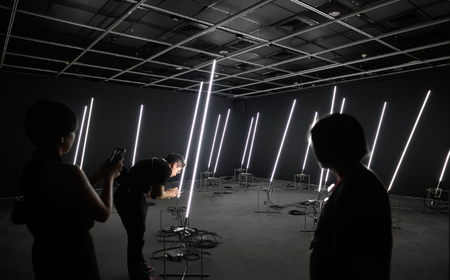
VR Online Exhibition
The Museum of Contemporary Art, Taipei presents a collection of virtual reality exhibitions, transforming its galleries…
Exhibitions SEP 19 — AUG 31 Now On
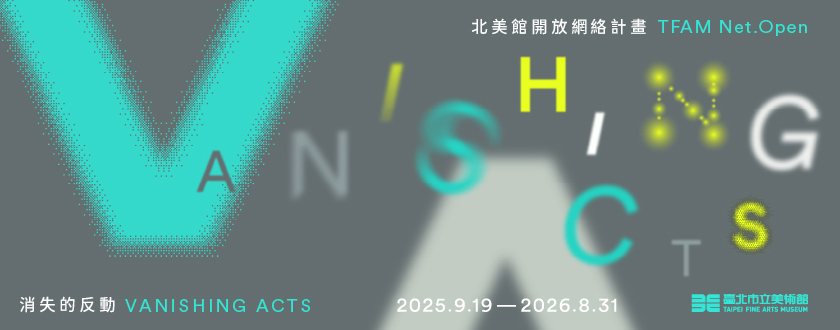
Taipei Fine Arts Museum Net.Open | Vanishing Reaction
Exhibitions JAN 1 — DEC 31 Now On