Exhibitions Now On
The Alliance of Tatu: Inter-Object Diplomacy Between Mountains and Sea
"The Alliance of Tatu: Inter-Object Diplomacy Between Mountains and Sea," curated by Shen Yu-chang (沈裕昌), Assistant Professor in the Department of Cultural and Creative Industries Management at National Taipei University of Education, is the first research exhibition by the Taichung Museum of Fine Arts to systematically review the development of fine arts in the Taichung region. Centered on the Tatu Terrace, it approaches from the two major aspects of local climate and the city, sorting out the historical context of central Taiwan's art development and repositioning its place in the history of Taiwanese art.
This exhibition brings together 55 artists from different generations and 70 cross-generational works in diverse media, combining museum collections, important loans, and contemporary commissioned creations. Starting from aspects such as the natural environment, transportation construction, industrial development, and cultural activities, it proposes twelve "Central Taiwan Art Images," unfolding into four sub-themes: "Terrace · Station · Patronage" examines how railway transportation and local support gathered artistic energy; "Estuary · Harbor · Debate" reviews the development of central Taiwan's harbors and major constructions, along with the post-war artistic thought movements they spurred; "River · Street · Glue Color" starts from the city's rivers and street scenes, seeing how artists depict everyday urban landscapes; "Green Fruit · Market · Craft" focuses on how agricultural product circulation and market formation drove the rise of local crafts and presented unique appearances, thereby outlining the multiple facets of central Taiwan's art development.
Among these, the highlight work serving as the exhibition's general introduction, Kunishima Suiba's "Comic Taiwan Chronicle," is publicly displayed at the museum after many years. As an important figure who established the foundation of satirical comics in Taiwanese newspapers, Kunishima Suiba uses single-panel satirical comic form to depict important historical nodes of Taiwan under Japanese rule from 1895 to 1938. Viewers can establish a clear spatiotemporal framework through his humorous images and concise text.
This exhibition also gathers representative works by several senior artists, including Lin Chih-chu's (林之助) "Taichung Park," "Liuchuan Humble House," and "Colorful Pond"; Chen Yin-hui's (陳銀輝) "Wufeng Old House"; Hsieh Li-fa's (謝里法) "Coast"; Ni Tsai-chin's (倪再沁) "Great Snow Mountain"; Chien Chia-chu's (簡嘉助) "Taichung Railway Station"; Yu Ju-chi's (余如季) "Shutter Moment"; and Lin Chuan-chu's (林權助) "Woman Carrying Child on Back," among others, outlining important features of central Taiwan's art development. Among them, Li Shih-chiao's (李石樵) "Portrait of Huang Huo-ting's Wife Li Pao" is making its first public appearance. Huang Huo-ting commissioned Li Shih-chiao to paint a portrait of his wife Li Pao, reflecting the artist's early connections with the local gentry network in Taichung. This work is also an important testament to understanding the development of modern Taichung city and local cultural networks. This exhibition also specially selects works from the museum's collection, showcasing profound humanistic and landscape concerns, such as Liu Kuo-tung's (劉國東) "Mountain Top," which depicts vast layered mountain scenery with bright colors, and Chen Hsia-yu's (陳夏雨) "Laborer," which portrays the spiritual appearance of post-war social laborers with restrained sculptural language.
Contemporary artists' creations and commissioned works expand the exhibition's thematic layers. Lin Wei-hsiang's (林煒翔) "Light in the Valley" uses layers of oil paint to create a flowing mountain forest atmosphere; Tang Tang-fa (唐唐發) and Fidati (Pindy Windy)'s "Bilami South Wind Drifts" presents the migrant worker culture and transnational daily life of ASEAN Square; Hsieh Mu-chi's (謝牧岐) "Liao Sang's Home in Tainan" responds to the classic paintings of artist Liao Chi-chun (廖繼春), opening a cross-generational dialogue; Lo Yi-chun's (羅懿君) "Deer Hide" uses dried banana peels to form a deer-shaped hide, connecting historical production, trade, and the Taiwan-Japan trade network. Through the juxtaposition of cross-generational works, the exhibition responds to the curatorial proposition of "Inter-Object Diplomacy," reconstructs the multiple faces of central Taiwan's art, and opens up cultural imaginings for the future.
This exhibition brings together 55 artists from different generations and 70 cross-generational works in diverse media, combining museum collections, important loans, and contemporary commissioned creations. Starting from aspects such as the natural environment, transportation construction, industrial development, and cultural activities, it proposes twelve "Central Taiwan Art Images," unfolding into four sub-themes: "Terrace · Station · Patronage" examines how railway transportation and local support gathered artistic energy; "Estuary · Harbor · Debate" reviews the development of central Taiwan's harbors and major constructions, along with the post-war artistic thought movements they spurred; "River · Street · Glue Color" starts from the city's rivers and street scenes, seeing how artists depict everyday urban landscapes; "Green Fruit · Market · Craft" focuses on how agricultural product circulation and market formation drove the rise of local crafts and presented unique appearances, thereby outlining the multiple facets of central Taiwan's art development.
Among these, the highlight work serving as the exhibition's general introduction, Kunishima Suiba's "Comic Taiwan Chronicle," is publicly displayed at the museum after many years. As an important figure who established the foundation of satirical comics in Taiwanese newspapers, Kunishima Suiba uses single-panel satirical comic form to depict important historical nodes of Taiwan under Japanese rule from 1895 to 1938. Viewers can establish a clear spatiotemporal framework through his humorous images and concise text.
This exhibition also gathers representative works by several senior artists, including Lin Chih-chu's (林之助) "Taichung Park," "Liuchuan Humble House," and "Colorful Pond"; Chen Yin-hui's (陳銀輝) "Wufeng Old House"; Hsieh Li-fa's (謝里法) "Coast"; Ni Tsai-chin's (倪再沁) "Great Snow Mountain"; Chien Chia-chu's (簡嘉助) "Taichung Railway Station"; Yu Ju-chi's (余如季) "Shutter Moment"; and Lin Chuan-chu's (林權助) "Woman Carrying Child on Back," among others, outlining important features of central Taiwan's art development. Among them, Li Shih-chiao's (李石樵) "Portrait of Huang Huo-ting's Wife Li Pao" is making its first public appearance. Huang Huo-ting commissioned Li Shih-chiao to paint a portrait of his wife Li Pao, reflecting the artist's early connections with the local gentry network in Taichung. This work is also an important testament to understanding the development of modern Taichung city and local cultural networks. This exhibition also specially selects works from the museum's collection, showcasing profound humanistic and landscape concerns, such as Liu Kuo-tung's (劉國東) "Mountain Top," which depicts vast layered mountain scenery with bright colors, and Chen Hsia-yu's (陳夏雨) "Laborer," which portrays the spiritual appearance of post-war social laborers with restrained sculptural language.
Contemporary artists' creations and commissioned works expand the exhibition's thematic layers. Lin Wei-hsiang's (林煒翔) "Light in the Valley" uses layers of oil paint to create a flowing mountain forest atmosphere; Tang Tang-fa (唐唐發) and Fidati (Pindy Windy)'s "Bilami South Wind Drifts" presents the migrant worker culture and transnational daily life of ASEAN Square; Hsieh Mu-chi's (謝牧岐) "Liao Sang's Home in Tainan" responds to the classic paintings of artist Liao Chi-chun (廖繼春), opening a cross-generational dialogue; Lo Yi-chun's (羅懿君) "Deer Hide" uses dried banana peels to form a deer-shaped hide, connecting historical production, trade, and the Taiwan-Japan trade network. Through the juxtaposition of cross-generational works, the exhibition responds to the curatorial proposition of "Inter-Object Diplomacy," reconstructs the multiple faces of central Taiwan's art, and opens up cultural imaginings for the future.
Event Details
- 2026-05-08 — 臺中綠美圖
You Might Also Like
Exhibitions JAN 19 — DEC 31 Now On
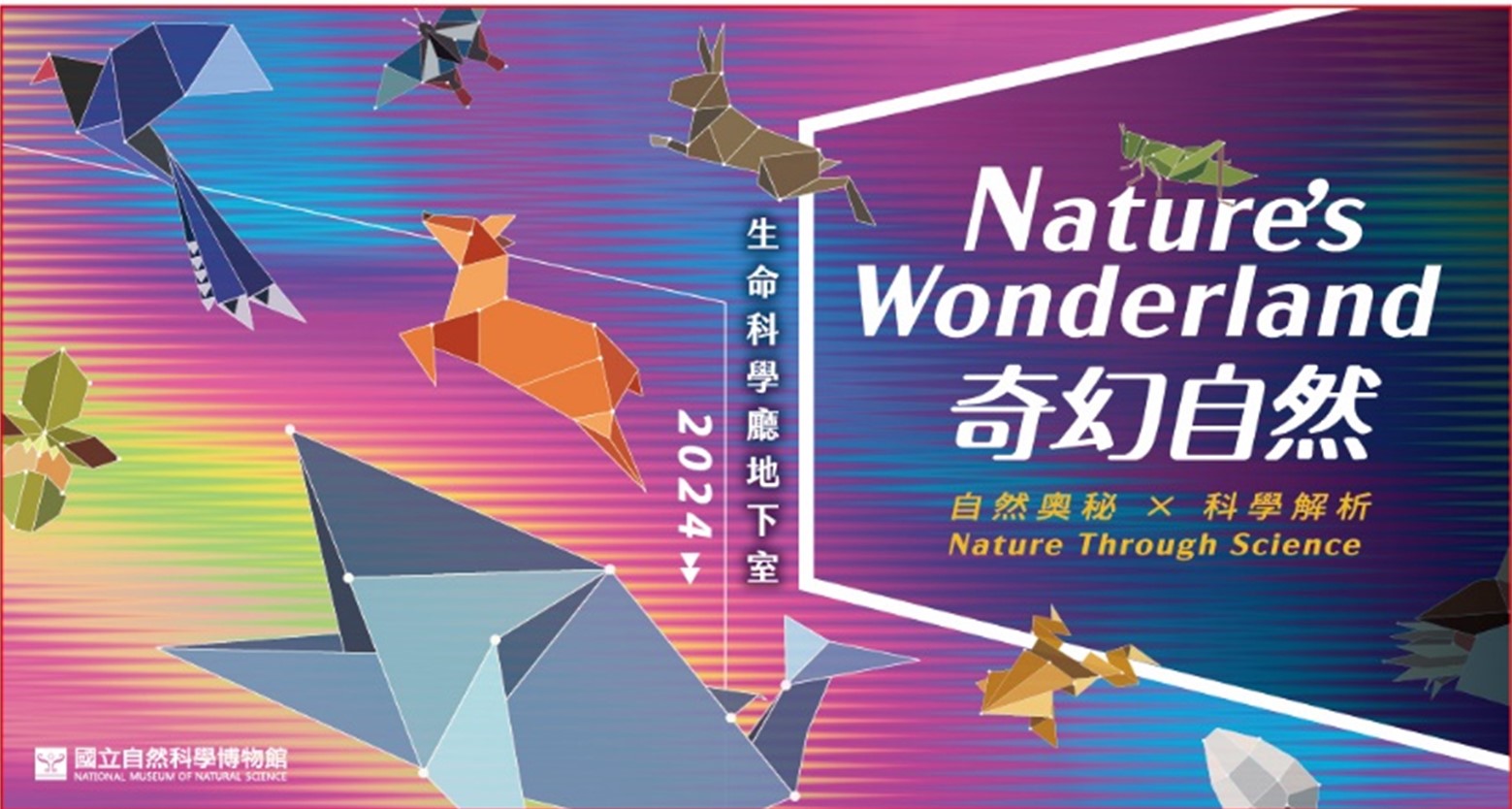
National Museum of Natural Science "Fantastic Nature" Permanent Exhibition
The National Museum of Natural Science welcomes a magnificent transformation of its Life Science Hall. The new…
Exhibitions SEP 17 — DEC 31 Now On
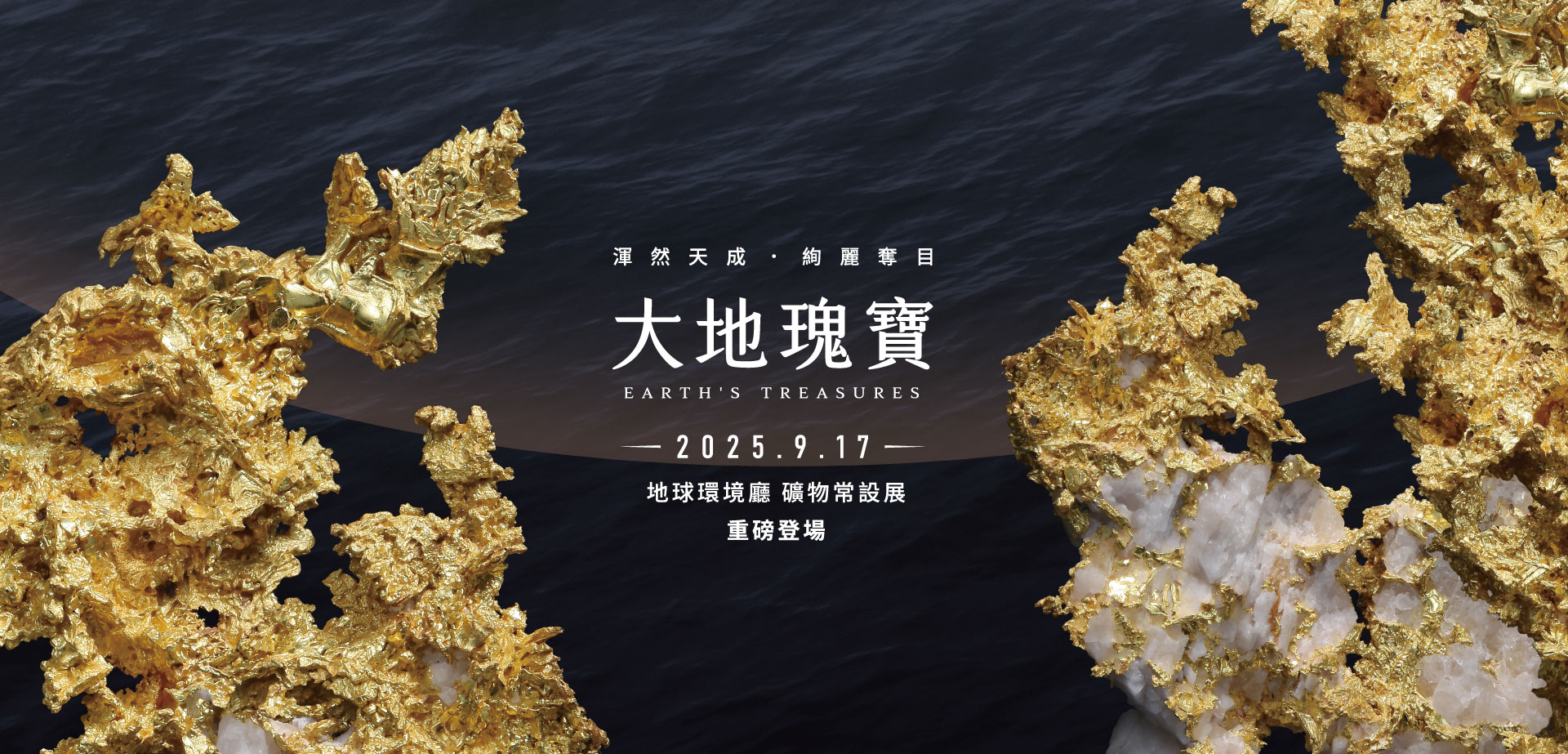
National Museum of Natural Science "Treasures of the Earth" Mineral Permanent Exhibition
After 5 years of planning, the National Museum of Natural Science is now proudly launching Taiwan's first large-scale…
Exhibitions JAN 1 — AUG 9 Now On
"24/7::: Repetition and Layering in Creation" Children's Art Education Exhibition
"24/7" (twenty-four-seven), meaning 24 hours a day, 7 days a week, is an idiom in the English-speaking world used to…