Exhibitions Now On
Infinite Instances and Sights
Located on the first island chain, Taiwan is not only a contested strategic point in geopolitics but has long been under the gaze and drills of the 'gray zone.' Taking this as its starting point, this exhibition attempts, from a video game-like worldview, to explore issues such as 'information power warfare,' 'geopolitics,' and 'war ethics.' However, the exhibition does not aim to collect or display documentary images of war, nor to recreate trauma scenes filled with smoke and gunfire; rather, it attempts, through the creative paths and heterogeneous perspectives of different artists, to deeply reflect on the 'image mechanism.'
The exhibition's narrative is divided into three thematic sections: Works in 'Character Menu and Visual Calibration' explore the mirrored similarities between the virtual and the real by modifying gameplay footage and deconstructing the logic of 3D modeling software. 'Frontline Fog of War' presents the fragility of ideologies and borders in different contexts; the constant acceleration of all images and internet technologies instead causes infinite contraction of the space for knowledge and media literacy. 'Developer Mode Loaded' will present artistic proposals of humans competing with, doubting, and collaborating with image tools, attempting to explore what kind of power relations are hidden behind this vast world of online images.
The globe has already become a giant theater of war. Disputes and struggles in different regions of the earth seem to have each opened their own 'instances.' These battlefields are controlled by those invisible hands under the post-Cold War framework, which, in the shadows of opposing camps, link conflicts everywhere together. Compared to the exchange of fire on physical geographical borders, the virtual battlefields of information and the internet have a more profound impact on human society. From the peepholes of early reconnaissance drones to today's AI-driven drone swarms, the lens has become an instrument for 'indirect' targeting. Contemporary military operations are undergoing a thorough 'de-realization'—images triumph over physical objects, making the act of killing abstract, becoming an automated, sterile procedure. This virtual interface constructed by high technology forms a violent 'frame' or filter, which, before we even generate emotion, pre-determines which lives are 'worthy of mourning' and which bodies are merely seen as needing to be eliminated... or are inconsequential.
Ultimately, we must face the fact: those who manipulate images and the internet determine the script of war. Real-world capital competition, military warfare, and geopolitics are, much like operating a virtual game, integrated into the public's daily life through news and social media. This change did not erupt overnight but has altered our perception like a frog slowly boiled in water. However, this does not mean we can only be passive NPCs. As long as we maintain clear critical thinking, we can expect that true productivity and energy have always been hidden in the hands of those who can traverse the frame. At such an urgent moment, this exhibition hopes, through the reflexivity of art, to maintain awareness and constantly calibrate the coordinates leading to the future.
The exhibition's narrative is divided into three thematic sections: Works in 'Character Menu and Visual Calibration' explore the mirrored similarities between the virtual and the real by modifying gameplay footage and deconstructing the logic of 3D modeling software. 'Frontline Fog of War' presents the fragility of ideologies and borders in different contexts; the constant acceleration of all images and internet technologies instead causes infinite contraction of the space for knowledge and media literacy. 'Developer Mode Loaded' will present artistic proposals of humans competing with, doubting, and collaborating with image tools, attempting to explore what kind of power relations are hidden behind this vast world of online images.
The globe has already become a giant theater of war. Disputes and struggles in different regions of the earth seem to have each opened their own 'instances.' These battlefields are controlled by those invisible hands under the post-Cold War framework, which, in the shadows of opposing camps, link conflicts everywhere together. Compared to the exchange of fire on physical geographical borders, the virtual battlefields of information and the internet have a more profound impact on human society. From the peepholes of early reconnaissance drones to today's AI-driven drone swarms, the lens has become an instrument for 'indirect' targeting. Contemporary military operations are undergoing a thorough 'de-realization'—images triumph over physical objects, making the act of killing abstract, becoming an automated, sterile procedure. This virtual interface constructed by high technology forms a violent 'frame' or filter, which, before we even generate emotion, pre-determines which lives are 'worthy of mourning' and which bodies are merely seen as needing to be eliminated... or are inconsequential.
Ultimately, we must face the fact: those who manipulate images and the internet determine the script of war. Real-world capital competition, military warfare, and geopolitics are, much like operating a virtual game, integrated into the public's daily life through news and social media. This change did not erupt overnight but has altered our perception like a frog slowly boiled in water. However, this does not mean we can only be passive NPCs. As long as we maintain clear critical thinking, we can expect that true productivity and energy have always been hidden in the hands of those who can traverse the frame. At such an urgent moment, this exhibition hopes, through the reflexivity of art, to maintain awareness and constantly calibrate the coordinates leading to the future.
Event Details
- 2026-03-28 — 國立臺灣美術館
You Might Also Like
Exhibitions JAN 19 — DEC 31 Now On
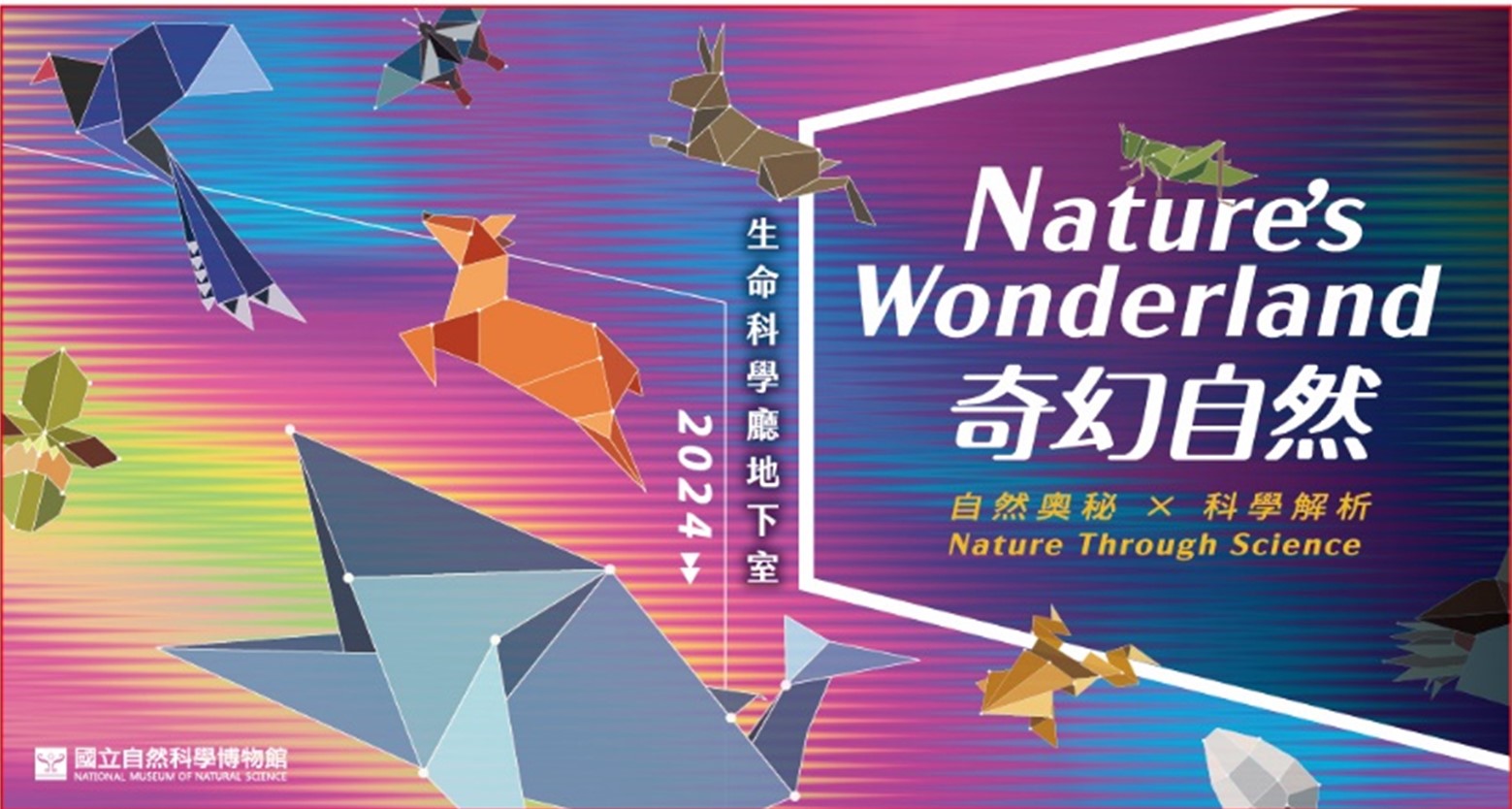
National Museum of Natural Science "Fantastic Nature" Permanent Exhibition
The National Museum of Natural Science welcomes a magnificent transformation of its Life Science Hall. The new…
Exhibitions SEP 17 — DEC 31 Now On
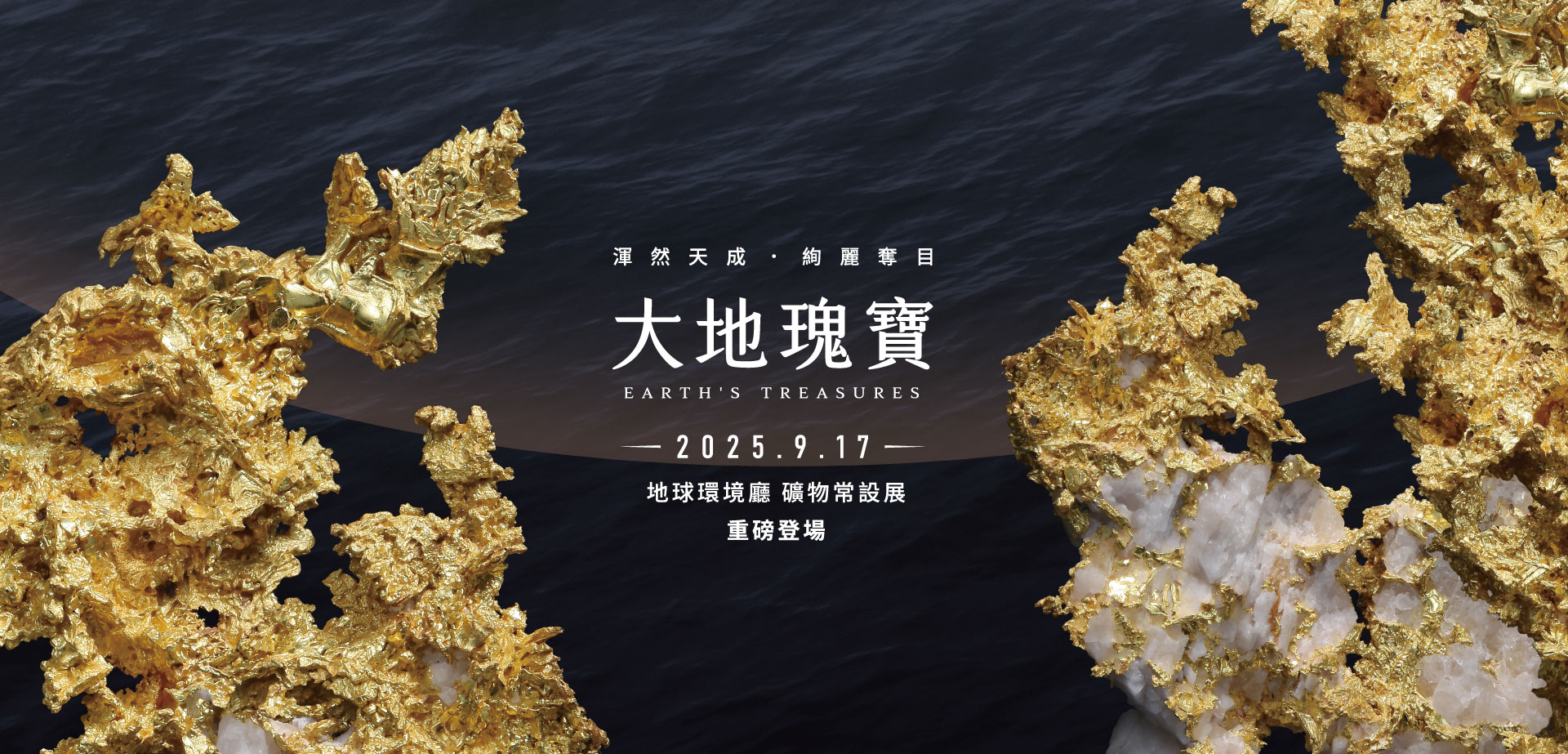
National Museum of Natural Science "Treasures of the Earth" Mineral Permanent Exhibition
After 5 years of planning, the National Museum of Natural Science is now proudly launching Taiwan's first large-scale…
Exhibitions JAN 1 — AUG 9 Now On
"24/7::: Repetition and Layering in Creation" Children's Art Education Exhibition
"24/7" (twenty-four-seven), meaning 24 hours a day, 7 days a week, is an idiom in the English-speaking world used to…